Best Practices for Automating ERP Processes With AI Agents
How to safely automate SAP, Oracle, and NetSuite workflows with AI agents, covering tool registries, approval gates, idempotency, and audit trails.

Most ERP automation projects assume the hard part is getting the model to understand accounting. In practice, the hard part is the opposite: constraining a capable model so it only takes actions the ledger can safely absorb. A chatbot's worst failure is a wrong sentence. An ERP agent's worst failure is a posted journal entry in a closed period, a duplicate payment run, or a vendor master change that silently breaks three-way match.
This piece is for platform architects putting agents inside SAP, Oracle, NetSuite, or Dynamics. It skips the demo-level advice and focuses on the mechanics that decide whether agentic ERP workflows survive their first quarter in production: interface selection, idempotency, posting-period guardrails, sandbox staging, and the audit trail an auditor will actually accept.
Pick the Interface Before You Pick the Model
The first design decision is not which LLM to use. It is which SAP or Oracle interface the agent is allowed to call, because that choice fixes the error semantics, the retry story, and the blast radius. In SAP, the practical options are BAPI, OData, and IDoc, and they are not interchangeable.
BAPIs give the richest error detail. The classic BAPI_ACC_DOCUMENT_POST and BAPI_INCOMINGINVOICE_CREATE return structured message tables that name the exact failing line item, which is what an agent needs to decide whether to retry, split, or escalate. The cost is operational: RFC connectivity, SAP connectors, and a conversation with the Basis team. OData is cleaner over HTTPS and better suited to agents running outside the corporate network, with the trade-off that nested error detail is less consistently populated. IDocs are batch-oriented and processed with a time delay, which rules them out for anything that needs synchronous confirmation but makes them the right surface for high-volume async posting where IDoc's built-in error re-processing earns its keep.
Rate limits matter here as much as semantics. SAP's own guidance for the Journal Entry Post API recommends no more than 15 parallel synchronous calls and 30 parallel async. An agent that fans out journal postings without respecting that ceiling will produce timeouts the model interprets as failures and retries, which is how duplicate entries get born. Encode the ceiling in the tool registry, not in a prompt.
Oracle and Microsoft present a similar fork. Oracle Fusion ships prebuilt Payables, Ledger, Planning, and Payments agents with security controls baked in, which shortens the surface area debate for teams already on Fusion. Microsoft's Copilot for Finance exposes an Account Reconciliation Agent that runs continuously between subledgers and the general ledger. Both reduce custom work; neither removes the architect's obligation to decide what the agent is allowed to call directly versus what must go through a wrapped service with its own guardrails. For deeper patterns on where that wrapper sits, see the site's piece on agent API architecture.
Idempotency Is the Single Most Important Control
Models retry. Networks retry. Queues retry. If a journal posting tool is not idempotent, every one of those retries can create a duplicate document in BKPF/BSEG or ACDOCA. The fix is boring and non-negotiable: every write-side tool call carries a client-generated idempotency key, and the ERP-side wrapper rejects a second call with the same key by returning the original document number rather than posting again.
Practical implementation looks like this:
- Generate the key before the agent reasons about the action, not after. The key is derived from the business event (invoice ID, run ID, period, company code), not from the LLM's output.
- Persist the key, the request payload hash, and the resulting document number in a dedicated table the wrapper owns. The ERP's own document number is the receipt.
- On any retry, the wrapper looks up the key and short-circuits. The agent sees success and the document reference, not a new posting.
- Reversal paths are first-class. Every posting tool has a paired reversal tool keyed to the original document, so a bad action can be unwound by the same agent under the same approval path that created it.
This is the same discipline the site has written about in the context of designing workflows users can trust: the state the user sees must be the state the system will converge on, even after failures.
Guardrails That Belong in the Tool, Not the Prompt
Prompts drift. Deterministic checks do not. Any constraint the business would describe as a policy belongs in the tool wrapper, enforced before the ERP call is made and logged whether the agent respected it or tried to bypass it.
The minimum set for a finance-adjacent agent:
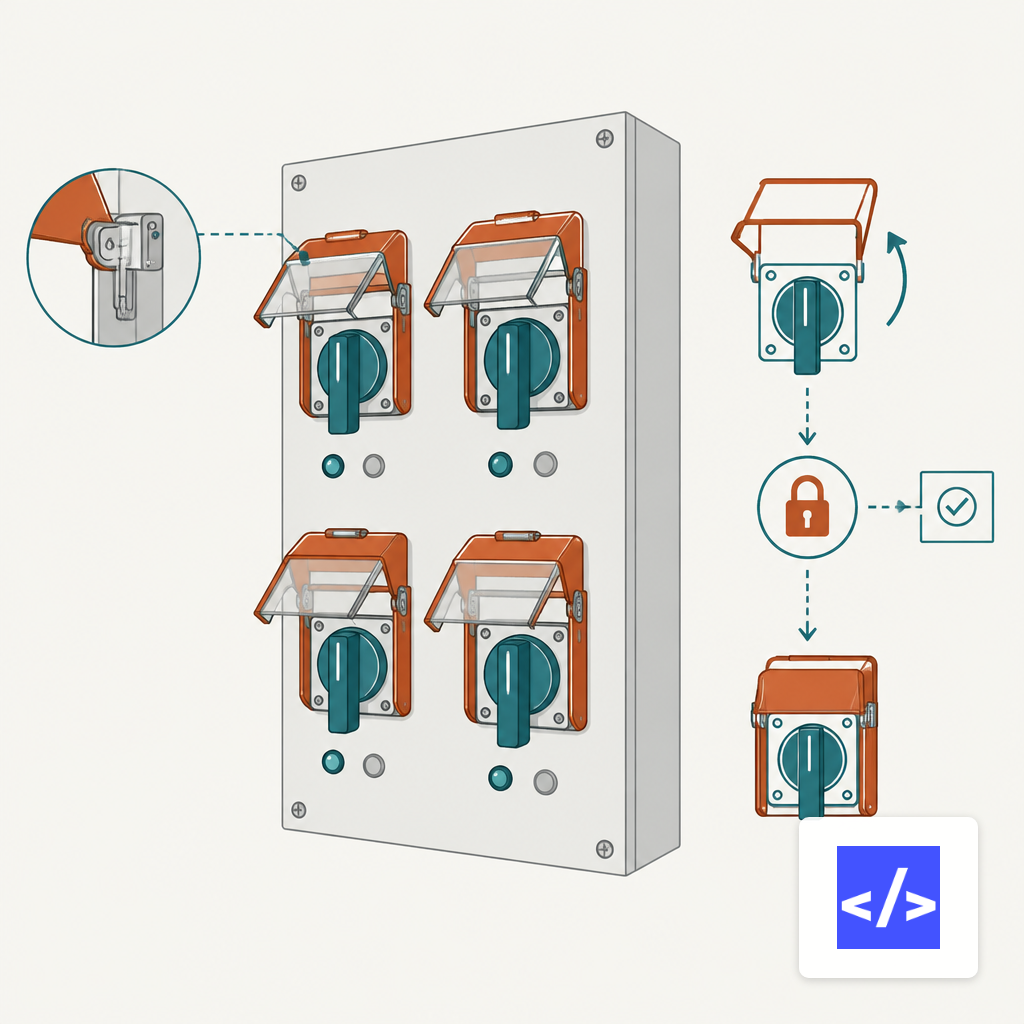
- Posting period check. Before any FI posting, the wrapper confirms the target period is open for the relevant account type in the target company code. A closed period returns a structured refusal, not an attempted post.
- Three-way match. For AP invoice posting, the wrapper verifies PO, goods receipt, and invoice line quantities and prices within configured tolerances before calling the BAPI. Mismatches route to the exception queue, not to a creative LLM resolution.
- Approval tier. Dollar thresholds, GL account sensitivity, and counterparty risk feed an approval policy that decides whether the action executes, requires a single approver, or requires dual control. The site's note on which agent actions actually need human approval is a useful starting taxonomy, and approval gates covers the implementation surface.
- Master data write locks. Vendor bank detail changes, GL account creation, and tax code edits are high-blast-radius actions. In most deployments they belong on an allowlist of zero: the agent proposes, a human posts.
The pattern across all four: the agent proposes an action in structured form, the wrapper evaluates policy, and only compliant actions reach the ERP. Everything else is logged and routed. This is the operational core of action execution for regulated workloads.
Stage Everything Through a Sandbox Client
No agent reaches production without posting cleanly in a sandbox client for a full period cycle. SAP customers typically have a dedicated client for integration testing with representative master data and open periods. Oracle Fusion offers test pods. NetSuite has sandbox accounts. Use them for more than smoke tests.
What a useful staging run looks like:
- Replay the last full month of real transactions, scrubbed of PII, through the agent against the sandbox client. Count the postings that would have required human intervention, and read why.
- Inject known-bad inputs: duplicate invoice numbers, out-of-tolerance quantities, closed-period dates, vendor master changes mid-flight. The acceptance bar is that the wrapper refuses or routes every one.
- Measure the retry behavior under induced latency. If the ERP responds in 30 seconds instead of 3, does the agent create one document or three? If it is three, the idempotency layer is not where it needs to be.
- Canary into production on a single company code or a single document type before expanding. The site's piece on canary deployments covers the mechanics; the ERP-specific wrinkle is that your canary unit is usually an accounting entity, not a traffic percentage.
Gartner expects AI-enabled tools to account for 62% of cloud ERP spending by 2027, up from 14% in 2024, which is one way of saying the sandbox discipline above is about to be exercised a lot more often by a lot more teams.
Build the Audit Trail the Auditor Will Accept
An AI audit trail for ERP postings has to answer four questions for every action: what was proposed, what policy was evaluated, who or what approved it, and what the ERP returned. The trail belongs outside the ERP, in a durable store the agent platform owns, and it has to tie each line back to the ERP's own document number for cross-reconciliation.
Minimum fields per action: timestamp, agent version, prompt and tool-input hashes, policy decisions with inputs, approver identity if applicable, idempotency key, ERP document reference, and the full ERP response payload. Pair this with agent versioning so a posting can be tied back to the exact behavior that produced it, not an abstraction of it. Deloitte's guidance on cloud ERP transformation with strong internal controls is the right register for how to frame this with internal audit.
Two anti-patterns to avoid. First, do not rely on the ERP's native change log alone; it will not record the agent's reasoning or the policy decisions that preceded the post. Second, do not store the audit trail in the same tenant as the agent runtime; a compromise of one should not corrupt the other.
What Realistic Impact Looks Like
Vendor-reported numbers in this category are generous, but the shape of the gains is consistent. IBM reports agent-driven finance workflows that cut cost per invoice by 25% and invoice cycle times by 32%, with monthly close cycles shortened by about a third. Microsoft benchmarks Copilot for Finance at roughly 50% faster invoice processing and 25 to 30% faster period-end close at fully deployed sites. SAP shipped more than 40 specialized AI agents and over 2,400 Joule Skills in Q1 2026, which signals how fast the surface area is expanding.
Treat those as directional. The payback period that matters is the one you can defend in your own close, with your own master data quality, and your own policy constraints. The site's breakdown of agent payback period by workflow type is a more honest starting point than vendor marketing, and the case for automating finance first explains why ERP is where the ROI math is cleanest.
| Workflow | Cost / balance reduction | Cycle-time reduction | Error reduction |
|---|---|---|---|
| Accounts payable (invoicing) | 25 | 32 | 0 |
| Accounts receivable (collections) | 43 | 32 | 0 |
| Monthly close | 0 | 33 | 2 |
Sequencing the First Deployment
A defensible order of operations for a first ERP agent:
- Pick one workflow with clear inputs and a reversible outcome. AP invoice posting with three-way match is a strong candidate; GL journal creation from a defined source system is another.
- Define the tool registry: BAPI, OData, or IDoc calls the agent may make, with rate limits, idempotency, and policy checks in the wrapper.
- Stage one full period in sandbox. Measure refusal rate, exception rate, and retry duplication rate. Fix the wrapper, not the prompt.
- Canary on one company code with dual-control approval. Hold there until the audit trail passes an internal review.
- Expand by entity or document type, never by removing guardrails.
Agentic ERP workflows are production software that happens to use a model. The model is the easy part to replace. The interface choices, the idempotency layer, the policy wrapper, and the audit trail are the parts that have to be right the first time, because the ledger does not forgive a wrong wire transfer.
Timothy Carter is the Chief Revenue Officer. Tim leads all revenue-generation activities for marketing and software development activities. He has helped to scale sales teams with the right mix of hustle and finesse. Based in Seattle, Washington, Tim enjoys spending time in Hawaii with family and playing disc golf.


Put an agent to work, the right way.
Start on Automatic and put the workflow you want to automate in front of engineers who have shipped agents in regulated environments.
Agentic AI, in your inbox.
Occasional, high-signal notes on building and operating AI agents — automation patterns, architecture, and governance. No spam.